The class discussion from Friday did help me a lot. Being able to ask questions and clarify the meaning behind certain sections really helped. I am still confused but there are some things I do understand better. The writing we did Thursday was hard for me because even though I read I really didn't have a clear understanding of what was going on in the book. I think it would be helpful to read then discuss then write so that I could write a more thourough analysis because I would be able to understand the reading a little better. Overall, I like the story and the parts that I can follow. I think it is very sad and I feel bad for Tayo but I am glad that I am being made aware of the way things were during this time for the Laguna Pueblo people.
Thursday, January 23, 2014
Reflection Week 1/20
After starting Ceremony, I'm interested but confused. The story is pulls me in but it is a lot of information at once. It is also kind of confusing because it jumps around a lot between Tayo's thoughts and experiences throughout different times in his life and it doesn't make it very clear which are memories and which are actually happening. I also feel like there are so many metaphors throughout the reading that it is hard to uncover and understand each one. I definitely need help finding the hidden meanings behind the text. I am trying to annotate very thouroughly so that I won't have trouble with my essay and I am putting question marks anywhere that I would like to dicuss further. I think it will be a good experience to read Ceremony but a challenge.
Monday, January 20, 2014
Dances with Wolves Reflection 2
Dances with Wolves impacted me in a way that I was not expecting. I feel more educated on native american life and I feel sad about the way the white settlers treated the natives and anyone associated with them. I never knew much about what really happened when white people came to settle in North America except that it wasn't pretty and they did some horrible things to the natives. Now I feel more enlightened as to why things happened the way they did. I feel that the white settlers saw themselves as more advanced than the natives and therefore superior. They also came, generally, with a mind set of domination. As far as the Sioux go, they only wanted peace and respect. Then the struggle with communication had a big impact. In the movie, John Dunbar makes a genuine effort to understand and the natives do the same. However most white settlers assumed the worst and immediately started to "prove" their power over the natives.
I'm really glad that Dances with Wolves was our introduction to this unit. I enjoy exploring topics that I don't know anything about and I think opening my eyes to these kinds of situations will only help me grow as a person. When we read The Laramie Project I was thankful for the way we were steered away from any sort of judge mental views and we were encouraged to look at all different sides of the story. I am carrying that policy with me into this unit. I am keeping and open mind and considering why things occurred the way they did. I am excited to learn more about the topic though. With The Laramie Project, I had witnessed discrimination against homosexual people and I knew a lot about the issue. The discrimination against Native Americans is something I know very little about and it is something I want to become more educated on.

(I picked this picture with the description of the Sand Creek Massacre to depict the type of discrimination natives dealt with)
I'm really glad that Dances with Wolves was our introduction to this unit. I enjoy exploring topics that I don't know anything about and I think opening my eyes to these kinds of situations will only help me grow as a person. When we read The Laramie Project I was thankful for the way we were steered away from any sort of judge mental views and we were encouraged to look at all different sides of the story. I am carrying that policy with me into this unit. I am keeping and open mind and considering why things occurred the way they did. I am excited to learn more about the topic though. With The Laramie Project, I had witnessed discrimination against homosexual people and I knew a lot about the issue. The discrimination against Native Americans is something I know very little about and it is something I want to become more educated on.
(I picked this picture with the description of the Sand Creek Massacre to depict the type of discrimination natives dealt with)
Native Study
Arapaho Tribe


The Arapaho Native Americans lived mainly in Colorado and Wyoming but there are traces of some branches of the tribe living in North and South Dakota as well as Montana. There were 5 dialects of their language spoken but now they are no longer spoken even though some people are familiar with it. They hunted buffalo, rode on horseback, and lived in tepees. They got along well with the Cheyenne, Sioux, and Gros Ventre tribes and fought with the Crow, Kiowa, and Comanche.
One of the famous chiefs of the Arapaho tribe was Little Raven. He is remembered as a very peaceful man that tried to make peace with enemy tribes and the white settlers. He was a part of the tribe at the Sand Creek Massacre of 1864. He still sought peace and fought until the Arapaho were granted reservation rights.

Kiowa Tribe

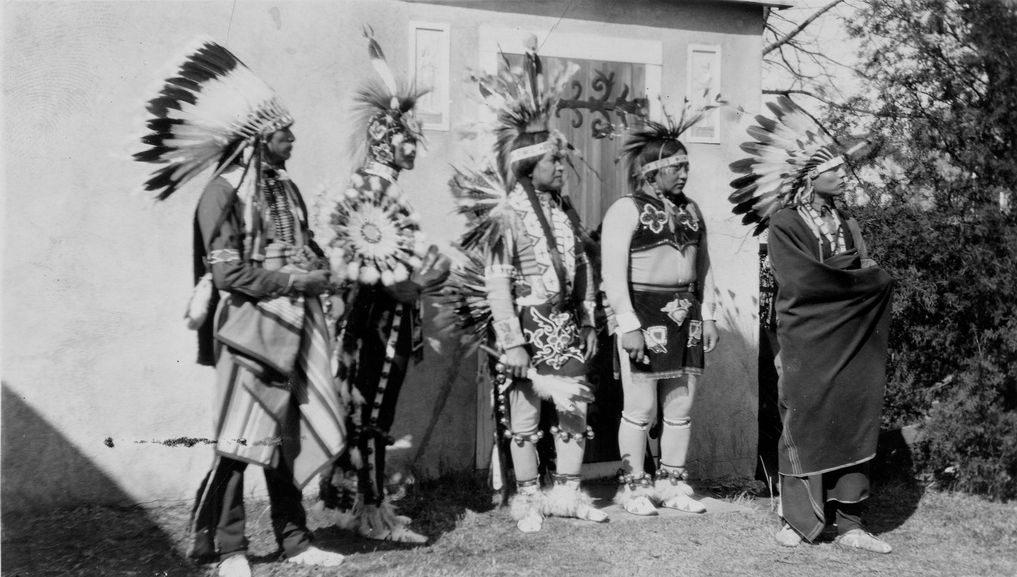
The Kiowa tribe lived in Montana at the sources of the Yellowstone and Missouri Rivers. Their region had deep snows. They were hunters, with bow and arrows, that hunted with dogs. Dogs were their only domesticated animal for awhile. Later on they learned to ride horses and hunted on horseback. They always kept the largest herd of horses of all the Plains Native Tribes.


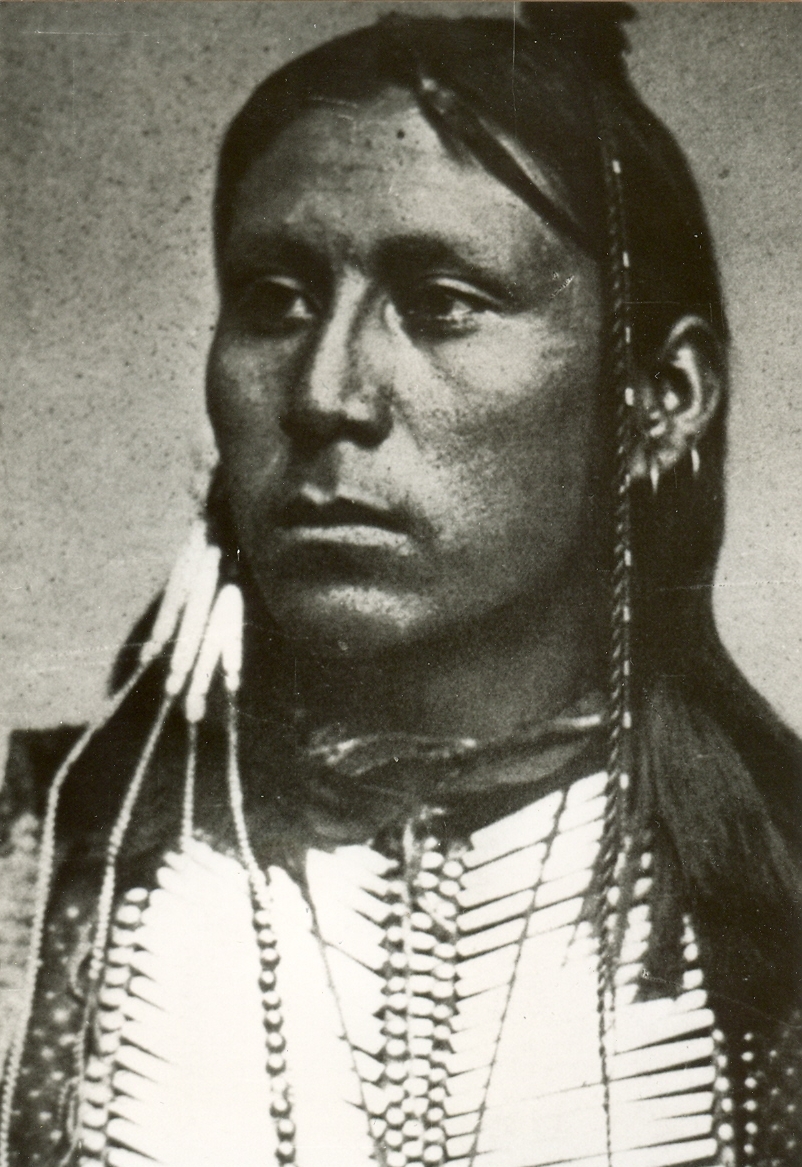
One of the most famous Kiowa Chiefs was Satanta or White Bear. He was a very smart negotiator, philosopher, but at the same time he was a murderer. He was known for his big build his whole life and was called Big Ribs as a baby. He was well recognized by white soldiers for his size as well. He negotiated multiple treaties with the soldiers and fought against them in many battles. He was well known for his bugle that he would sound as the indication of a battle beginning or simply to make his presence known.


The Arapaho Native Americans lived mainly in Colorado and Wyoming but there are traces of some branches of the tribe living in North and South Dakota as well as Montana. There were 5 dialects of their language spoken but now they are no longer spoken even though some people are familiar with it. They hunted buffalo, rode on horseback, and lived in tepees. They got along well with the Cheyenne, Sioux, and Gros Ventre tribes and fought with the Crow, Kiowa, and Comanche.
One of the famous chiefs of the Arapaho tribe was Little Raven. He is remembered as a very peaceful man that tried to make peace with enemy tribes and the white settlers. He was a part of the tribe at the Sand Creek Massacre of 1864. He still sought peace and fought until the Arapaho were granted reservation rights.

Kiowa Tribe

The Kiowa tribe lived in Montana at the sources of the Yellowstone and Missouri Rivers. Their region had deep snows. They were hunters, with bow and arrows, that hunted with dogs. Dogs were their only domesticated animal for awhile. Later on they learned to ride horses and hunted on horseback. They always kept the largest herd of horses of all the Plains Native Tribes.


One of the most famous Kiowa Chiefs was Satanta or White Bear. He was a very smart negotiator, philosopher, but at the same time he was a murderer. He was known for his big build his whole life and was called Big Ribs as a baby. He was well recognized by white soldiers for his size as well. He negotiated multiple treaties with the soldiers and fought against them in many battles. He was well known for his bugle that he would sound as the indication of a battle beginning or simply to make his presence known.
Monday, January 13, 2014
Dances with Wolves
I am finding Dances with Wolves very interesting so far and I am anxious to see how it continues. It is inspiring to see a story of cultural difference and more so of respect for another group of people or person. This movie has enlightened me to the fact that discrimination generally comes from a lack of knowledge. Some white people saw natives as people who were so different from them they must be bad. John Dunbar gave them a chance just as they gave him one. It is so refreshing to see that acceptance, generosity, and strive for communication.
There are some very touching scenes and parts of the story that have made an impact on me. An example of this is the dynamic of emotions portrayed on opposite ends of the spectrum from two separate scenes is very powerful. When John Dunbar rides into the confederate side in the Christ pose as a suicide attempt with such sadness about his leg and situation I felt the depression so intensely. Then in contrast, when John Dunbar moves to his new post I felt his happiness and motivation to serve. Both of the emotions portrayed from these scenes are completely different yet I felt both of them so strongly. I think that is one of the main things drawing me in, in the movie. It has an ability to pull emotions out of me which creates a much deeper meaning for me.


Monday, December 16, 2013
Semester 1 Reflection
Although this class was a challenge for me I still really enjoyed it. I have learned more valuable information in this semester of this class than I have in my other 3 years of Language Arts at Monarch. I especially enjoyed the modern approach used in this class, reading and learning about modern issues and events. I think what I have learned in this class has made me more knowledgeable about the world I live in and the things I learned in this class I will remember for the rest of my life.
The memoir project was awesome because it was so individualized. I was able to pick something that I was genuinely interested in and wanted to learn more about. Even though I am pretty shy and I was dreading the presentation it was a big step for me and opened my eyes to the fact that I want to be an involved person. This class has taught me how to be an active participant and I think I have made strides in this class. The Laramie Project was my favorite project. I find the topic incredibly emotional and moving. I also loved that it opened up so many good conversations and enlightened so many people that have not necessarily been around someone who is homosexual or has been raised in a way where they have prejudice. I have so much respect for that. Lastly, my least favorite project was the final debate. Although I found my topic very interesting and I enjoyed researching it the actual presentation of the project was very hard to prepare. I think it may have been easier as an individual project. I still enjoyed it and I appreciate what I got out of it but of the three it was my least favorite.

Friday, November 15, 2013
Reflection
After watching all the videos in class I was flooded with new perspectives and unanswered questions. I still believe that the attack on Matthew Shepard was partially a hate crime but I think that meth played a role as well. The thing that was most fascinating to me was watching Aaron Mckinney's interview on the 20/20 special. Russell Henderson's interested me as well but what was so shocking for me about McKinney's was his demeanor. He seemed so indifferent about the whole situation. I cannot understand how someone could do such a horrible thing to another person in the first place but on top of that it unbelieveable that he shows almost no regret or remorse. He sort of just behaves like it happened, I did it, it's over with. It was striking and something that I had a hard time understanding.
Monday, November 11, 2013
The Laramie Project Reflection
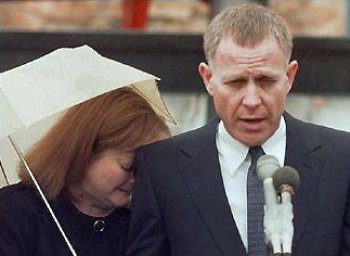
In Act III of The Laramie Project, something that truly amazed me was the statement Dennis Shepard made to the court sparing Aaron McKinney's life. It had to take an amazingly generous and forgiving family to let Aaron McKinney live after what he did to their son Matthew Shepard. In that situation, I don't know what I would have done but I would hope that I could be loving enough to do what they did. It brought tears to my eyes and I think the words will stay with Aaron McKinney until the day that he dies. Dennis Shepard says, "Mr. McKinney, I am going to grant you life, as hard as it is for me to do so, because of Matthew. Every time you celebrate Christmas, a birthday, the fourth of July remember that Matt isn't. Every time you wake up in your prison cell, remember that you had the opportunity and the ability to stop your actions that night. You robbed me of something very precious, and I will never forgive you for that. Mr. McKinney, I give you life in the memory of one who no longer lives. May you have a long life, and may you thank Matthew everyday for it." (Kaufman p. 96) I cannot explain the effect that statement had on me and I find it completely incredible the way the Shepard family handled the situation.

Subscribe to:
Posts (Atom)